Twenty in a row. Then it’s yours.
Streak drills for EASA ATPL theory. Miss one and the streak starts over, and whatever you missed comes back tomorrow. Set your exam date and every day is planned for you.
50 drills and 728 items across 4 subjects. Free during beta.
The tower wants you back where you started. In the air the same white flashes mean something else: land here and go to the apron. Same light, different meaning – that is what the drill trains.
Built for the facts you must know cold
Streaks, not scrolling
Each drill is one topic from the syllabus. You are done when you land a full streak – one miss and you start over.
A plan to your exam
Set the date. Each day mixes due reviews with new items, and missed items come back until they stick.
Drawn, not described
Holding entries, light signals, SAR symbols and signal-area markings are drawn, the way you will meet them.
Subjects
The four subjects of the first exam sitting are live. The rest follow during the year.
Air Law
Rules of the air, airspace, signals, flight plans and licensing, straight from SERA and the ICAO Annexes.
- Freedoms of the Air
- Light Signals
- Declared Distances
- VMC Minima
- + 13 more
Principles of Flight
How a wing makes lift, what changes it, and the speeds and formulas you must be able to do in your head.
- Trend: Mass
- Trend: Altitude
- Trend: CG Aft
- Trend: Trailing-Edge Flaps
- + 8 more
Human Performance
How body and mind behave in a cockpit: eye, ear, oxygen, fatigue, stress and human error.
- Vestibular & Night Illusions
- Approach Illusions
- Hypoxia & Altitude
- Gas Laws & Barotrauma
- + 6 more
Communications
How to say it on the radio: alphabet, numbers, call signs, standard phrases, distress and radio failure.
- ICAO Alphabet
- Q-Codes
- Transmitting Numbers
- Standard Words & Phrases
- + 7 more
Guides
Short, exact explanations of the topics students get wrong most often.
Light gun signals: what every colour means
The full SERA table – steady, flashing and red flare, in flight and on the ground – plus the tricks that make it stick.
Read the guide →Holding entries: direct, parallel or offset?
Compare your heading to the inbound track, read the sector, fly the entry. Worked examples included.
Read the guide →SAR ground–air visual signals, explained
What survivors lay out, what rescue units lay out, and how to remember all ten symbols.
Read the guide →How to study for EASA ATPL theory
Retrieval, spacing and a plan that ends a week before the exam – without a 14-hour desk.
Read the guide →The ICAO phonetic alphabet, exactly as Annex 10 spells it
All 26 words with the Annex 10 pronunciation, the digits, and the five spellings students get wrong.
Read the guide →Hypoxia and time of useful consciousness
The four kinds of hypoxia, the time of useful consciousness by flight level, and the altitude numbers behind them.
Read the guide →Radio failure: what to squawk, how long to hold, when to land
Squawk 7600, the seven and twenty minute rules, when to start the approach, and what to say when you cannot hear a reply.
Read the guide →Stall speed, load factor and bank angle
One formula and one square root explain every stall-speed question about turns, mass and manoeuvring speed.
Read the guide →VFR weather minima: visibility and distance from cloud
One table for the SERA visibility and cloud-distance minima, plus Special VFR and the control zone limits.
Read the guide →If you are intercepted: signals, squawk and frequency
The visual signals in both directions, the transponder code and the emergency frequency, in one place.
Read the guide →Wake turbulence separation: 2 or 3 minutes, and the DODIA rule
Two minutes or three? A table and a five-letter memory trick cover every case in the exam.
Read the guide →MAYDAY or PAN PAN: distress, urgency and priority
Distress or urgency, how to start the call, how silence is imposed and the six message priorities in order.
Read the guide →Standard words and phrases: what ROGER, WILCO and AFFIRM mean
Sixteen standard words, what each one means exactly, and the pairs that students swap in the exam.
Read the guide →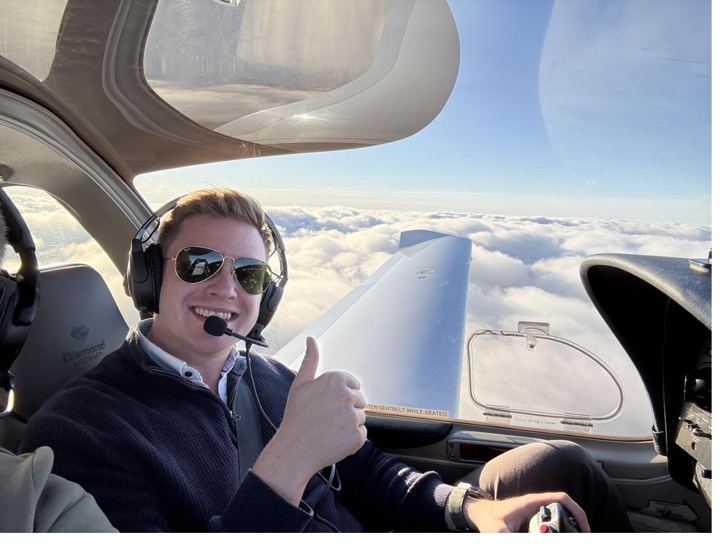
Built by a student pilot
I fly out of Linköping and Växjö and sit my first ATPL exams this November. ATPL Games is the tool I wanted: short drills for the facts you have to know cold, written from the regulation and fixed the same day someone reports an error.
Edwin, founder
Questions
Are these the real EASA exam questions?
No. Every drill is written from the source regulations and the EASA learning objectives. Real exam questions are confidential, and learning the facts behind them works better anyway.
Does ATPL Games replace my question bank?
No, it complements it. The question bank tests you. ATPL Games makes the facts stick first, so the question bank becomes revision instead of first contact.
Which subjects are covered?
Air Law, Principles of Flight, Human Performance and Communications, with 50 drills and 728 items. More subjects follow during the year.
How does the daily plan work?
Set your exam date. Every day you get the items that are due for review plus a share of new items, so everything is covered a week before the exam.
What does it cost?
Nothing during the beta – a free account unlocks every drill. After the beta, the ATPL Pass costs €49 for 12 months, with no automatic renewal.
Can I share my account?
No. An account is personal and can be active on up to three devices at a time. Signing in on a fourth device signs out the one used longest ago.
Start with one drill
No sign-up needed for the free drills. A free account unlocks the rest during the beta.